
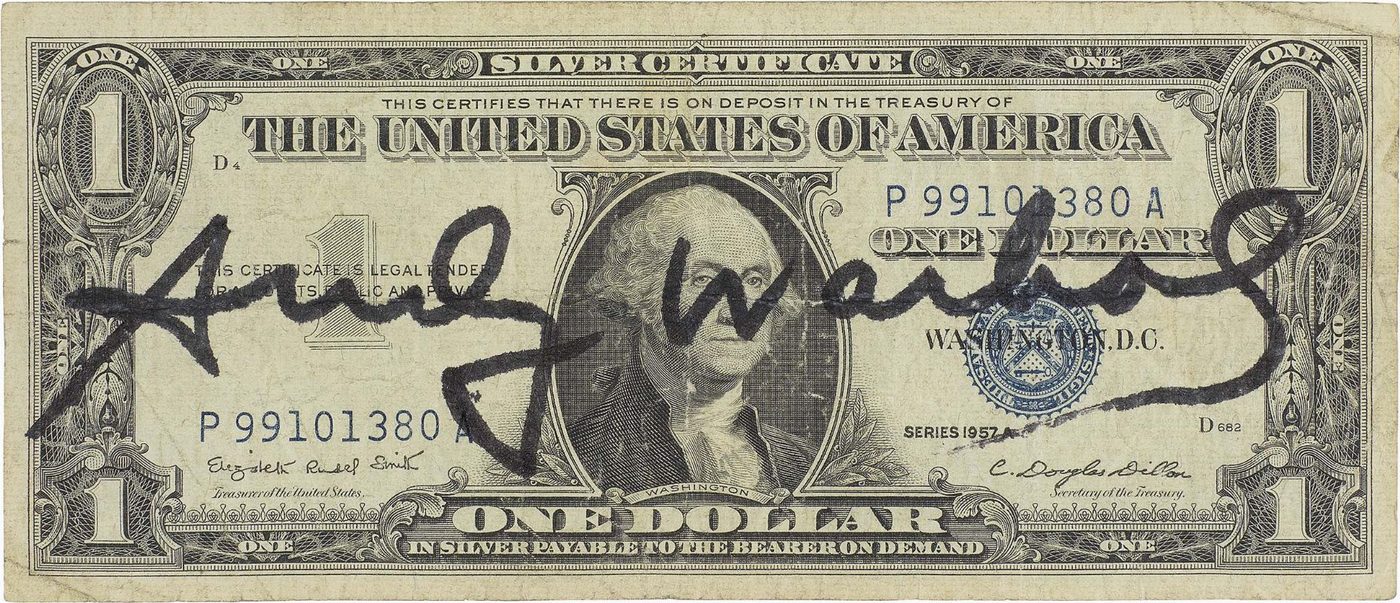
Money has followed art for as long as art has existed: the Medici, patrons in the truest sense, and the Florentine bankers in general backed Botticelli and Michelangelo, the pharaohs commissioned statues and objects for their tombs, and now, in the spotlight, are Asian billionaires.
One of the first economists to tackle the analysis of art from an economic point of view was Adam Smith, who, between 1762 and 1785, wrote several essays on the subject. The discipline studies everything tied to the creation, distribution, and consumption of works of art.
So why did economics start paying attention to art?
Perhaps a couple of figures are enough to answer that: in 2017 the art market generated 65 billion dollars, up 12% from the previous year (UBS data, The Art Market 2018).
The biggest art lovers, by far, remain Americans, first both in value and in sales volume. Silver goes to the Chinese, who spent 13 billion dollars, posting 14% growth. Italy makes the top ten countries by trading volume for artworks. The art most preferred by buyers worldwide is contemporary art, chosen 8 times out of 10.
Anyone who thinks this is an elitist world, reserved for a few wealthy enthusiasts, is mistaken: contrary to popular belief, art isn't a luxury, and it doesn't appeal only to a narrow circle of “fanatics.” Most transactions, in fact, fall between 5,000 and 50,000 dollars; 11% of works sell for under a thousand dollars, and 20% sell between one thousand and five thousand. In 2017, collectors and dealers, as well as investors with no ties to the art world, started spending again, choosing a sculpture or a painting on the wall over a gold bar locked in a safe.
Another notable figure from the UBS report is the growth of online sales. That growth hasn't hurt employment in the sector: staff numbers have stayed stable at three million despite the boom of Instagram, a genuine meeting point for artists and collectors, and specialized platforms. Web sales today account for just 2% via social media and 6% online overall.
The shift toward online sales is also reaching smaller buyers, people who are choosing art over other safe-haven assets like gold or stocks, even though, unlike those, investing in art is a long-term game: whoever invests in art today will almost certainly see prices rise over the course of a decade.
Online sales are also reshaping the sector on the price side, the true engine of contemporary art: as mentioned, 11% of works sold cost under a thousand dollars, and 20% sold between one thousand and five thousand. The price of a work can be seen as the ratio between its market value and its qualitative value, based on multiple variables including critical recognition, date, size, material, and more.
Returns in this market are mainly of two kinds: financial, measured through changes in monetary value, and physical, meaning the aesthetic dividend, measured indirectly as the difference between the financial return on the artwork and the return from more strictly financial instruments like stocks and government bonds.
The art market has a dark side too: while buying established, well-known artists like Modigliani, Picasso, or Cézanne, who belong to the modern art market, guarantees safe investments with steadily rising prices, the contemporary art market looks very different. The first and biggest issue is the speculative angle: for contemporary artists, returns are far less certain, because you're investing, or betting, on an intangible asset that's hard to value. In the age of the financialization of art, there's a real risk of creating a speculative bubble, meaning extremely high price volatility with an unjustified upward push followed by an inevitable crash. The market, in other words, is watching artworks turn into a kind of derivative security, where people bet on a future rise in the price tied to a young artist. The goal is to resell later, once the young artist, hopefully, becomes an established one. The art of finance thus turns into the finance of art. A work becomes comparable to a commodity or financial instrument, prized by hedge funds and private equity funds, among the few players with enough capital to invest in art of real value.
The sharing economy deserves its own paragraph too, having made its way into the art world as well. The project is called “Sharart, sharing art,” the new product from CalliopeArte, an Italian company specializing in representing artists, organizing exhibitions, and promoting art and culture. The initiative was launched to spread art, particularly Italian art, making it more innovative, democratic, and in step with the times. Sharart lets people live surrounded by art without necessarily owning it: works can be displayed through purchase or long-term rental, with the goal of enhancing and elevating living and working spaces.
This is just the latest in a long series of initiatives bringing contemporary art ever closer to the heart of the sharing economy. Another interesting project is “My Home Gallery,” a movement applying the sharing economy to art, letting artists from anywhere in the world get discovered by opening their own homes to gallerists, collectors, tourists, and art lovers, who can visit tailor-made exhibitions and share experiences with the artist, like a workshop or a dinner. This way, supply and demand meet more easily, and more localized art markets are created.
Art, to wrap up, has managed to work its way, over more than 500 years, into every corner of the economy, from the age of patronage to the age of the sharing economy, and has even been compared to derivative instruments like swaps or options. Despite the high volatility, especially in the contemporary art market, investing in art almost always pays off, even if only in the long run.
Who knows, maybe artworks will be the new government bonds.